
Memories of Maize and Beans
Nostalgia
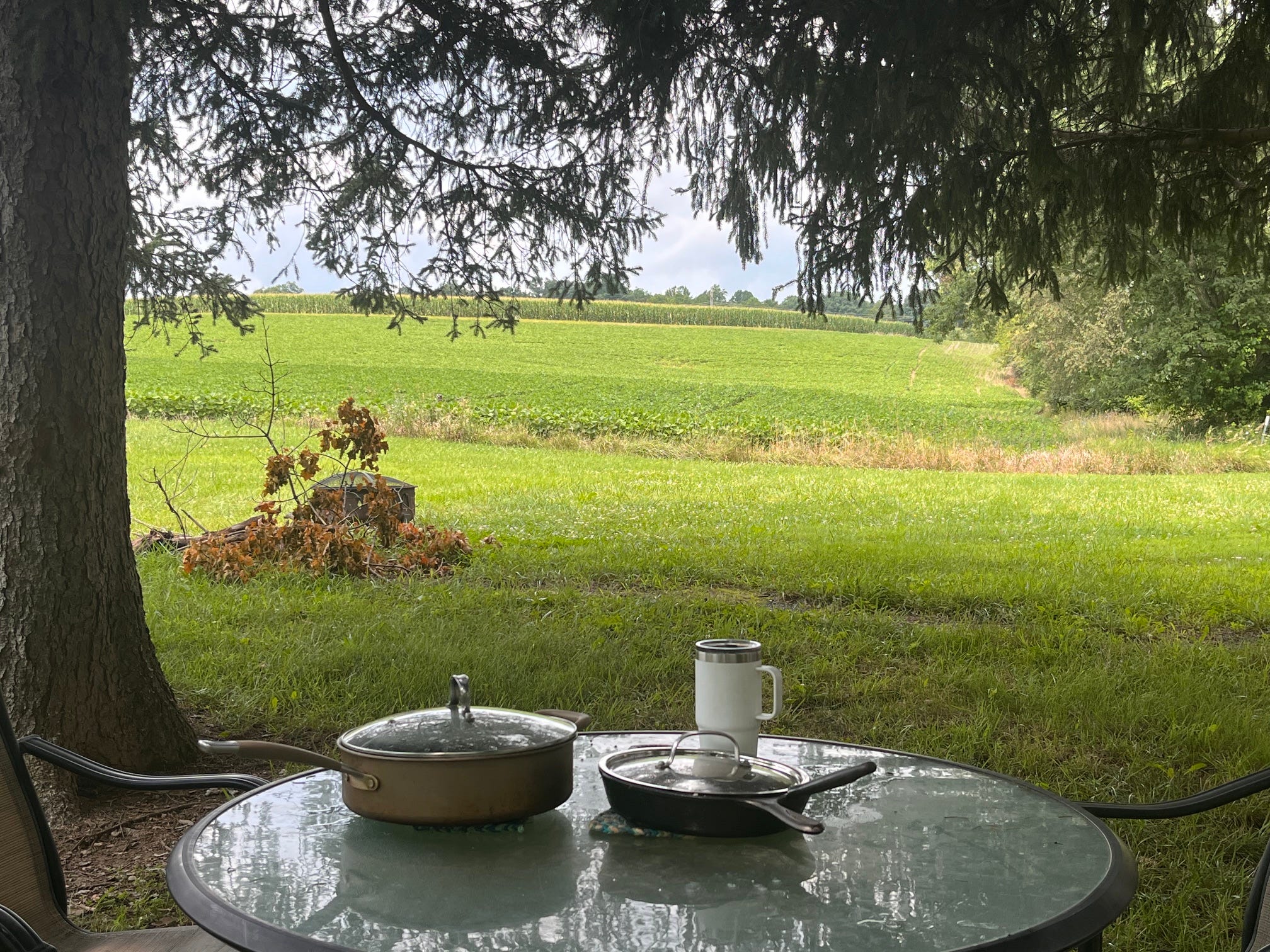
Maryland summer mornings.
Most mornings, anytime from 5.45am on, I’ve been sitting outside with coffee, watching the same two fields.
Maize atop the hill. Beans from here to there.
Americans call it corn, of course. In New Zealand we say maize. For Tanzanians, mahindi.
The crops went in over mid to late spring. The low hum of the old red two wheel-drive straight-six-cylinder International 1086 pulling the drill was like hearing a long lost favorite soundtrack.
Since then I’ve had the quiet pleasure of watching them grow.
The maize especially.
Once it got a decent amount of rain, you could actually see the difference day by day. If I missed a morning because it was raining, or went away for two or three days, I’d come back and think, blimey that’s shot up.
The beans will be podding out before long.
There’s a farm track between the two fields, raised slightly so it also functions as a contour bund. Slows the runoff running down the slope to keep it from taking half the soil with it.
We had bunds like that in Tanzania too.
Nothing particularly exciting about them but, when rain comes hard on sloping land, they earn their keep.
A few times now I’ve seen whitetails cautiously appear out of the maize. One morning a doe with two fawns, walking along the track nervously.
Bacho Village near Dareda. Namuai Farm on West Kilimanjaro. Later, Mbale District in Uganda. Over there maize and beans were ubiquitous.
You’d see cassava occasionally, and rice in some lower swampy areas like Magugu. Sorghum too, when heading south towards Dodoma. But maize and beans were the ordinary local crops people depended on.
They also make practical sense together.
Being legumes, beans leave nitrogen in the soil. Maize, basically a very large type of grass with a serious appetite, benefits from that nitrogen the following year.
At Namuai Farm I grew wheat and beans rather than maize, though plenty of our neighbours grew it.
And occasionally you had to chase animal pests off the crops.
Gazelles would leave smartly. Ostriches resisted, so could be a nuisance. Elephants in the beans at 2am hit another level entirely.
I left Tanzania twenty-two years ago, Uganda sixteen. Yet sitting here watching maize push skyward and beans bushing out, those years don’t feel too distant.
Good years. Hard ones too.
And I found myself thinking about the rotation again. The beans doing their quiet work in the soil, leaving something behind that next year’s maize can draw on.
Memory works like that too.
Old places, past seasons, doing their quiet work underneath. Leaving something in the soil of a heart God is still tending.
I didn’t plan to sit here every morning thinking about farming in East Africa. The maize and beans prompted that. Maybe that’s the point.
The years we think we’ve left behind aren’t wasted ground. They’re last season’s crop, feeding the harvest about to come.